
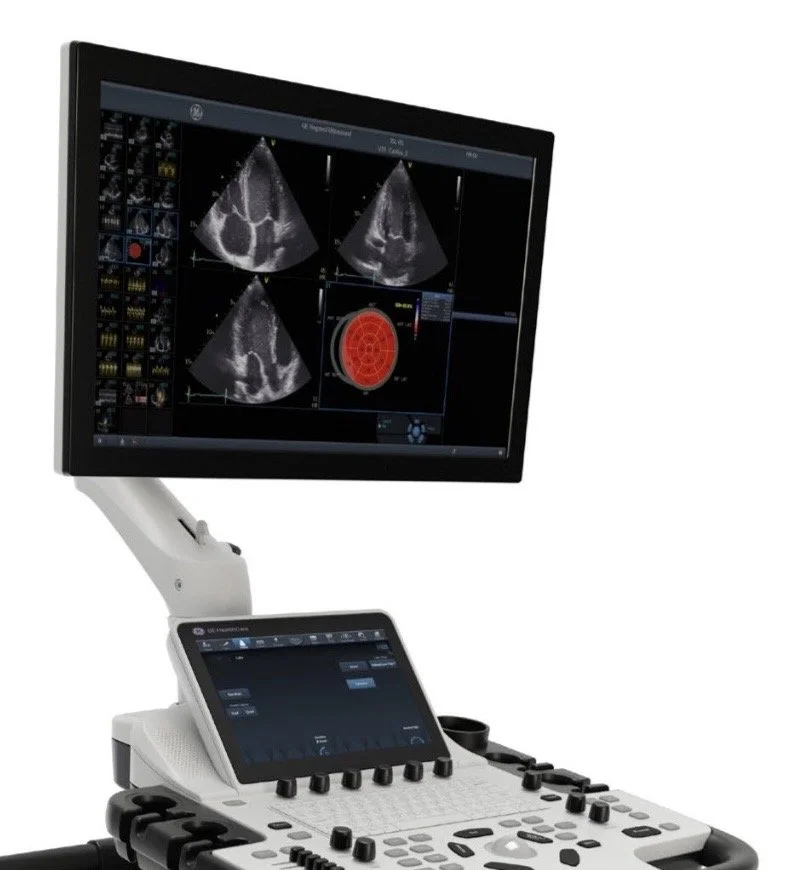
Accurate diagnosis is the foundation of effective treatment — diagnostic cardiology turns symptoms and suspicion into actionable clinical plans.
Diagnostic Procedures
Diagnostic cardiology is the branch of cardiovascular medicine dedicated to accurately identifying and characterizing heart and vascular diseases through non-invasive and invasive testing, imaging, and physiologic assessment.
It provides the critical information needed to confirm diagnoses, assess severity, guide treatment decisions, and determine prognosis.

Our Comprehensive Services
At our Ambulatory Cardiovascular Center, we provide advanced diagnostic services for cardiovascular and vascular health. Procedures are performed by skilled professionals in a comfortable, state-of-the-art environment, emphasizing accuracy, safety, and minimal discomfort. Services are categorized below for clarity.
-
Quick screening for aortic aneurysms to prevent ruptures.
-
Non-invasive test for peripheral arterial disease; compares arm/leg blood pressure to identify reduced flow due to blockages in the leg arteries
-
Examines abdominal aorta and iliac arteries for aneurysms or occlusions.
-
Gold-standard invasive test for coronary disease and hemodynamics.
Catheter inserted via wrist/groin under sedation; contrast dye and X-rays identify blockages.
Measures pressures for valve/heart failure assessment.
-
Measures functional capacity, distinguishing cardiac from pulmonary issues.
Exercise on treadmill (8-12 minutes) with mask for real-time heart/lung/muscle monitoring.
Supervised in-office to pinpoint shortness of breath or fatigue causes.
-
Evaluates carotids for stroke risk and atherosclerosis; visualizes plaque and blood flow
-
Ultrasound assessing valves, chambers, systolic/diastolic function, and pericardial disease.
Non-invasive, radiation-free; uses chest transducer (TTE) for real-time images.
TEE (sedated esophageal probe) for detailed views pre-surgery or when needed.
-
Quick, painless test recording heart's electrical activity via electrode patches on chest, arms, and legs.
Detects irregular rhythms, heart attacks, and other issues.
-
Long-term monitoring for palpitations, syncope, and intermittent arrhythmias. Holter: continuous 24-48 hours.
Event monitors: 1-4 weeks, symptom-activated or auto-detect.
Data transmitted to provider; loop recorders for extended tracking.
-
Evaluates reflux and valve incompetence causing varicose veins, swelling, or skin changes.
-
High-resolution imaging for early detection of diabetic foot complications and chronic venous insufficiency via temperature changes.
-
Assesses arm/leg arterial flow; detects narrowings or blockages.
-
Evaluates heart under stress via exercise or medication, including ECG, echo, or nuclear imaging (SPECT/PET).
Monitors response during treadmill or bike activity to detect hidden issues like blockages.
-
Detects blood clots in deep veins; assesses acute/chronic issues.